
 1 / 3
1 / 3Rubber mouldings
Rubber mouldings
Bring us the broken one. We’ll make you a new one.
Bushes, gaskets, inflatable seals and rubber diaphragms.
The rubber part is often the cheapest component in an assembly and the one that stops everything. A diaphragm splits, a bush perishes, a gasket gives, and the machine is down for a part that cost less than the callout.
Then you find out it is obsolete.
Bring us the broken one. We'll make you a new one.
Making a part from the part
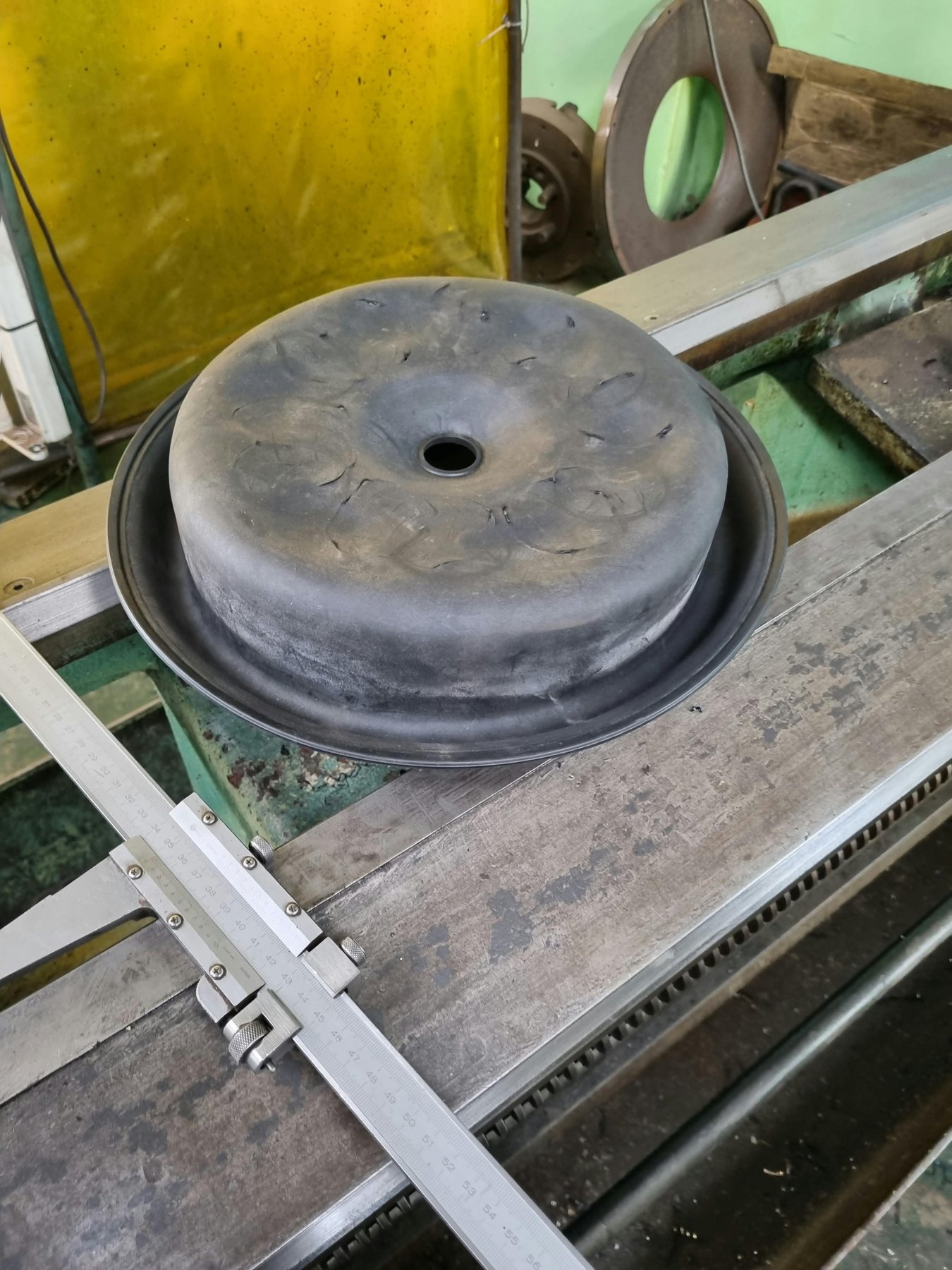
Where there is no drawing and no supplier, the old part is the drawing. Even a perished or torn one carries the dimensions, the section, the hardness and the way it mounted.
We measure what is left, work out what it was before it aged, and mould a new one. Rubber shrinks, hardens and takes a set over years in service, so the finished part is made to what the original was when it was new, not to what came out of the machine.
If you have a piece of the old one, keep it. Even a fragment gives the section and the material.
That includes rubber parts for cars. When a part is no longer available to buy anywhere, we make a new mould and mould the part.
 1 / 5
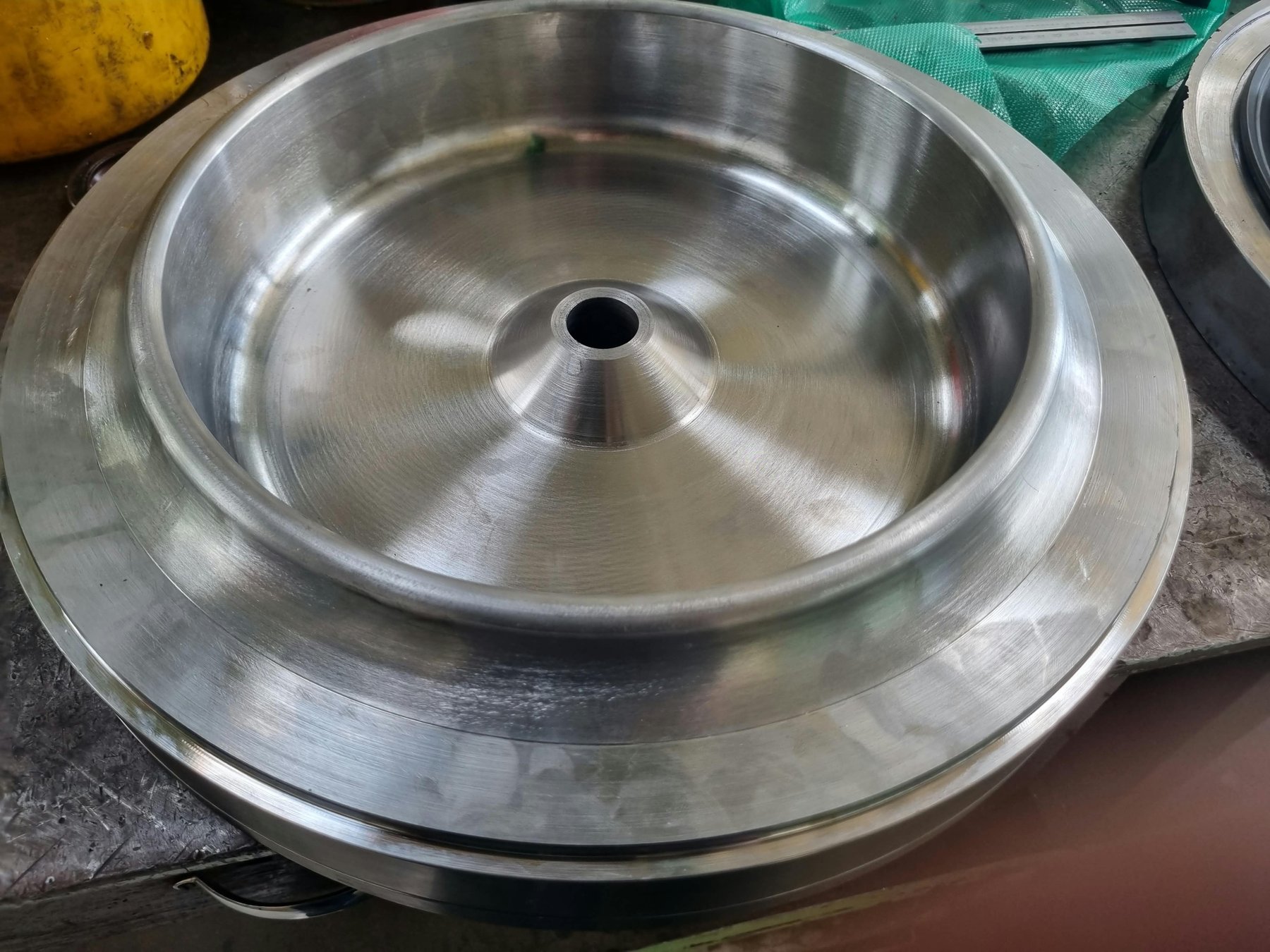
1 / 5We make the moulds too
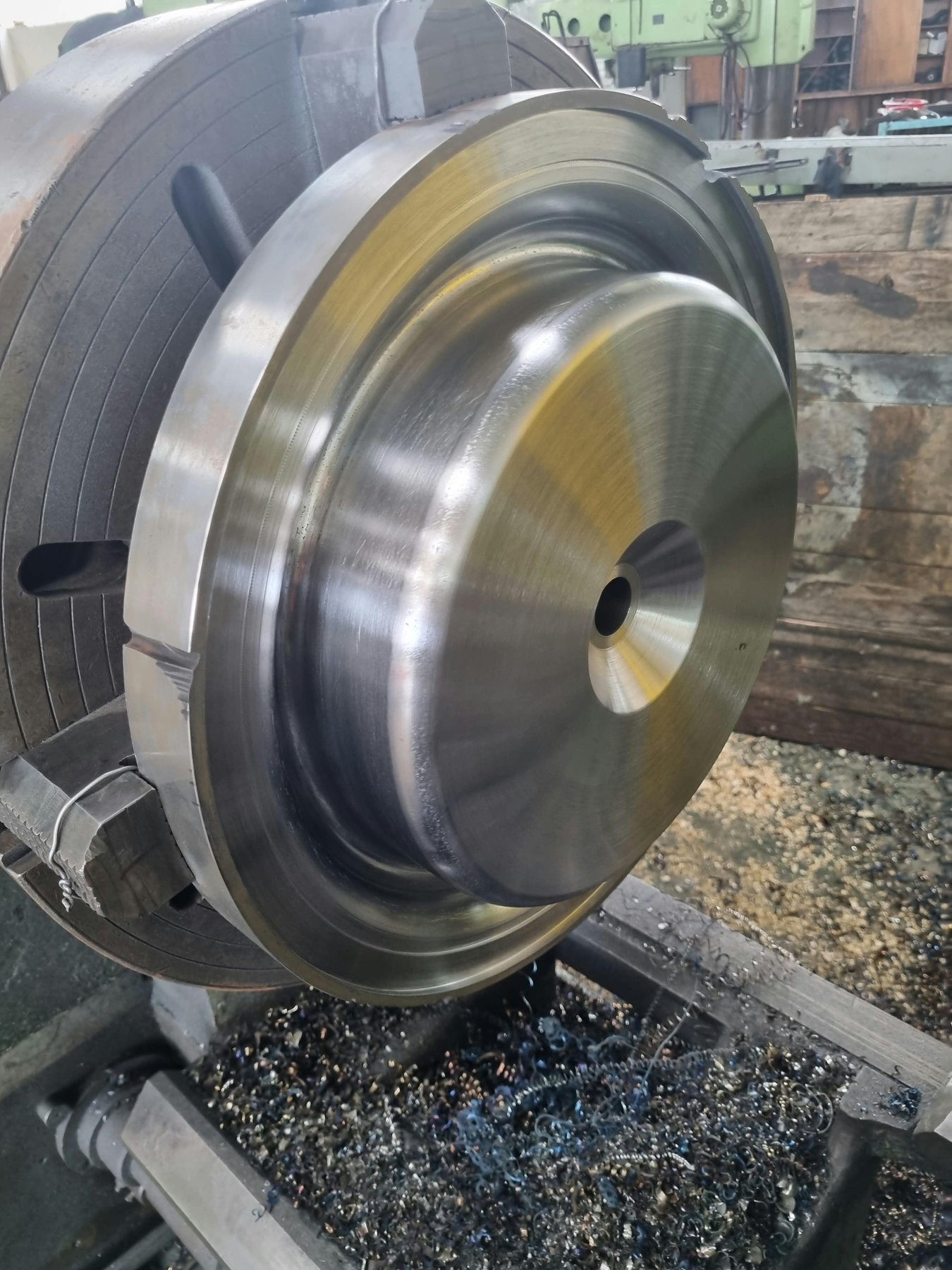
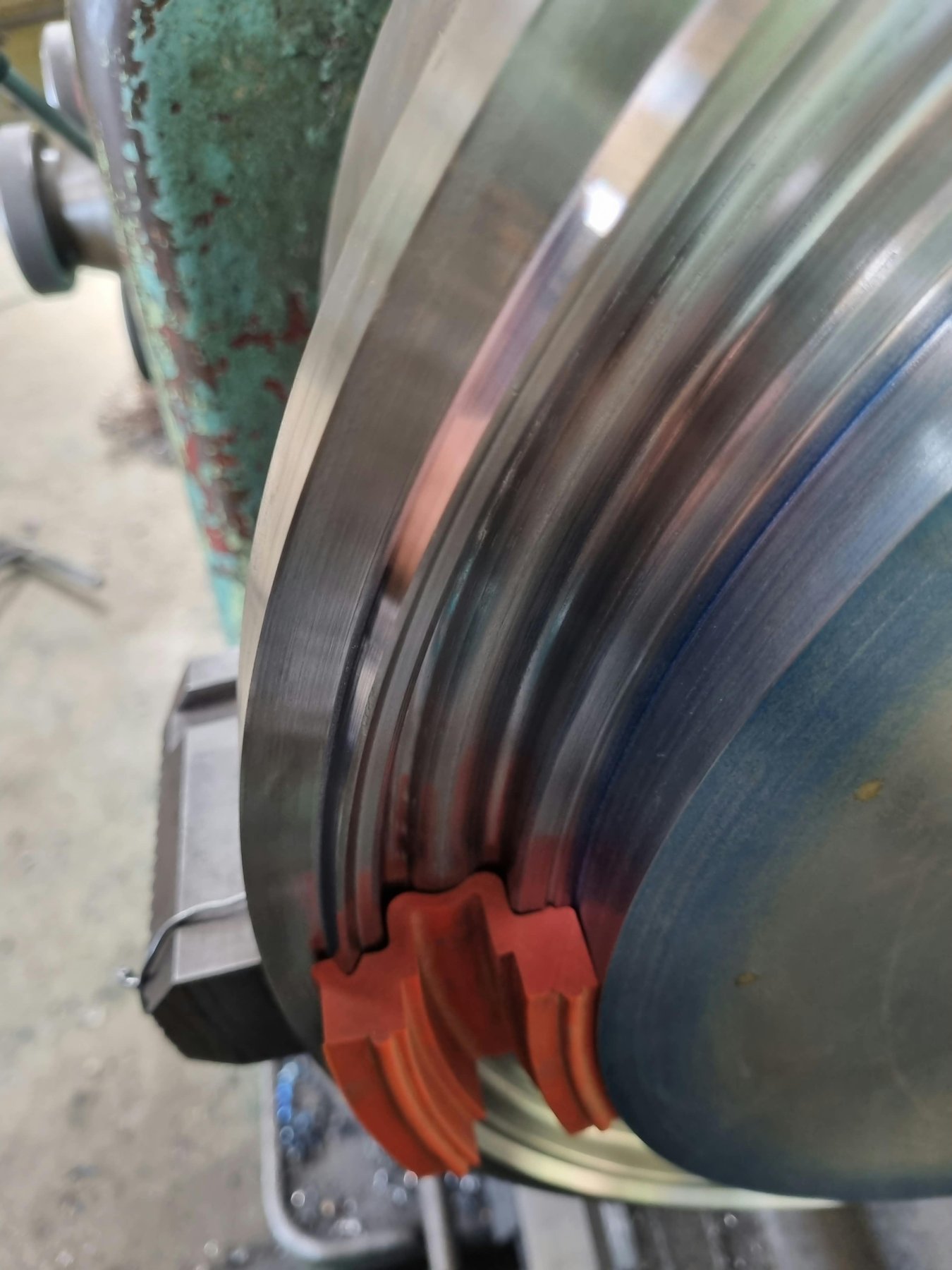
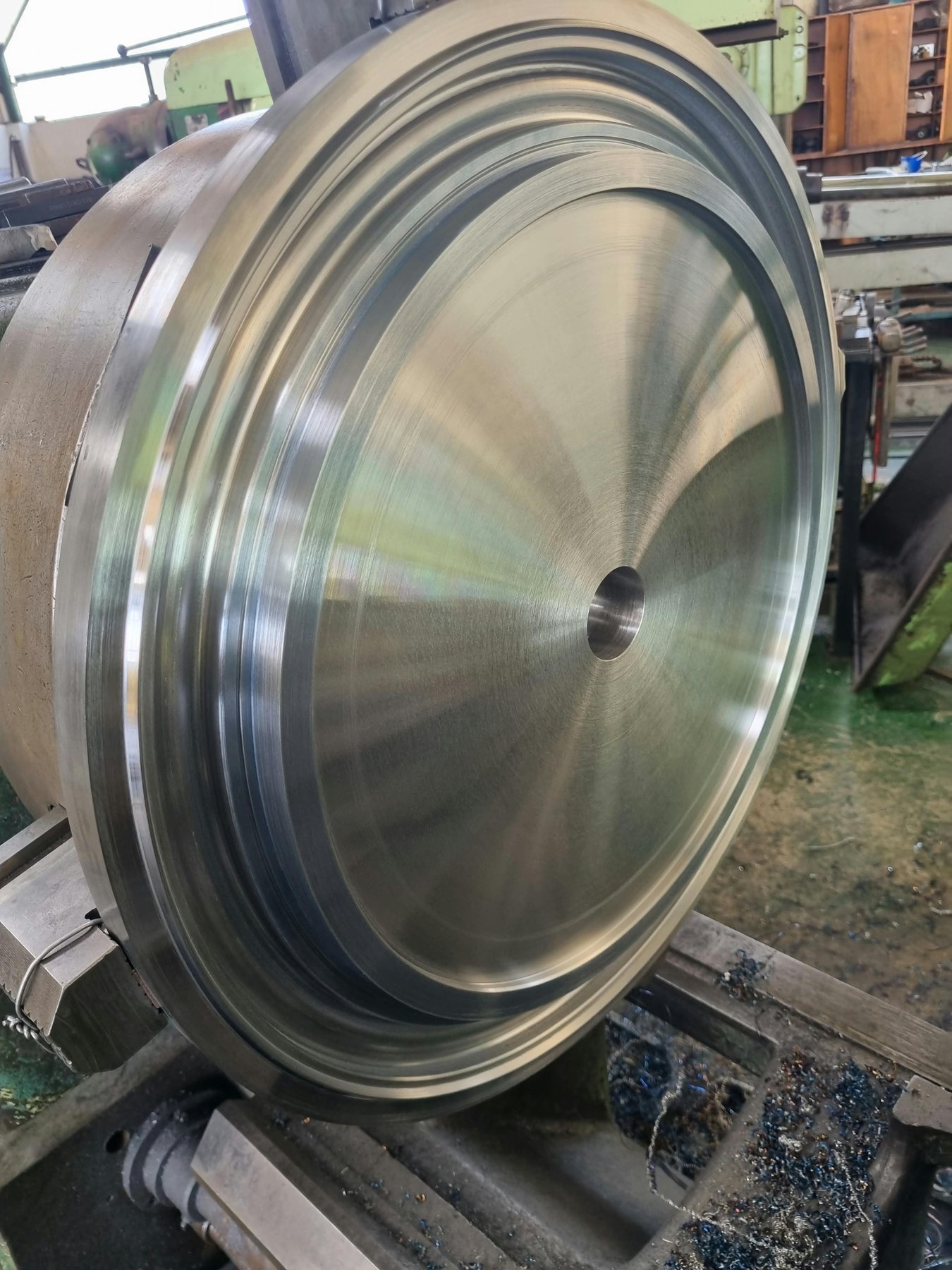
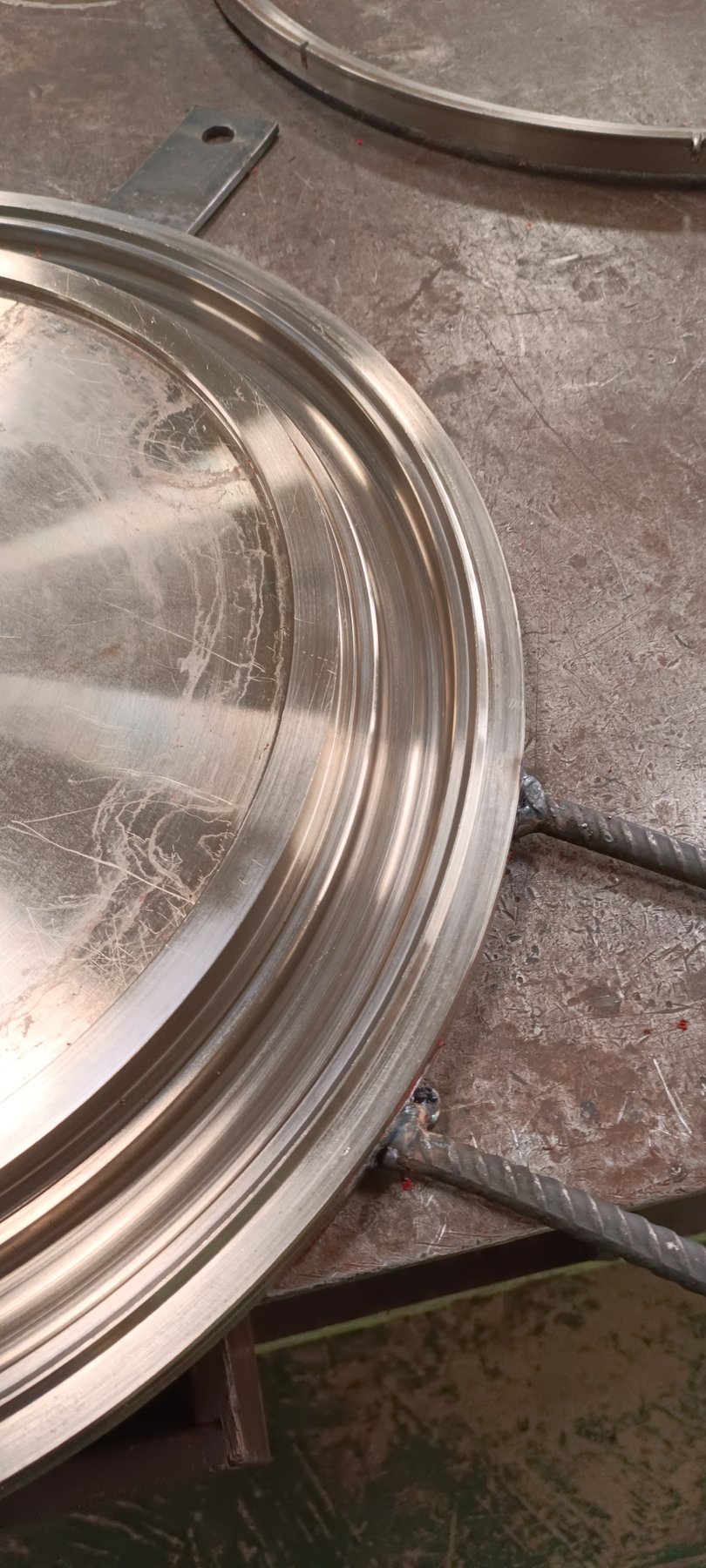
Every rubber part starts with a steel mould. We machine our moulds ourselves, on the same floor as the rest of our work — so there is no outside toolmaker to wait for, and a part that nobody else will make is still worth making.
What we mould
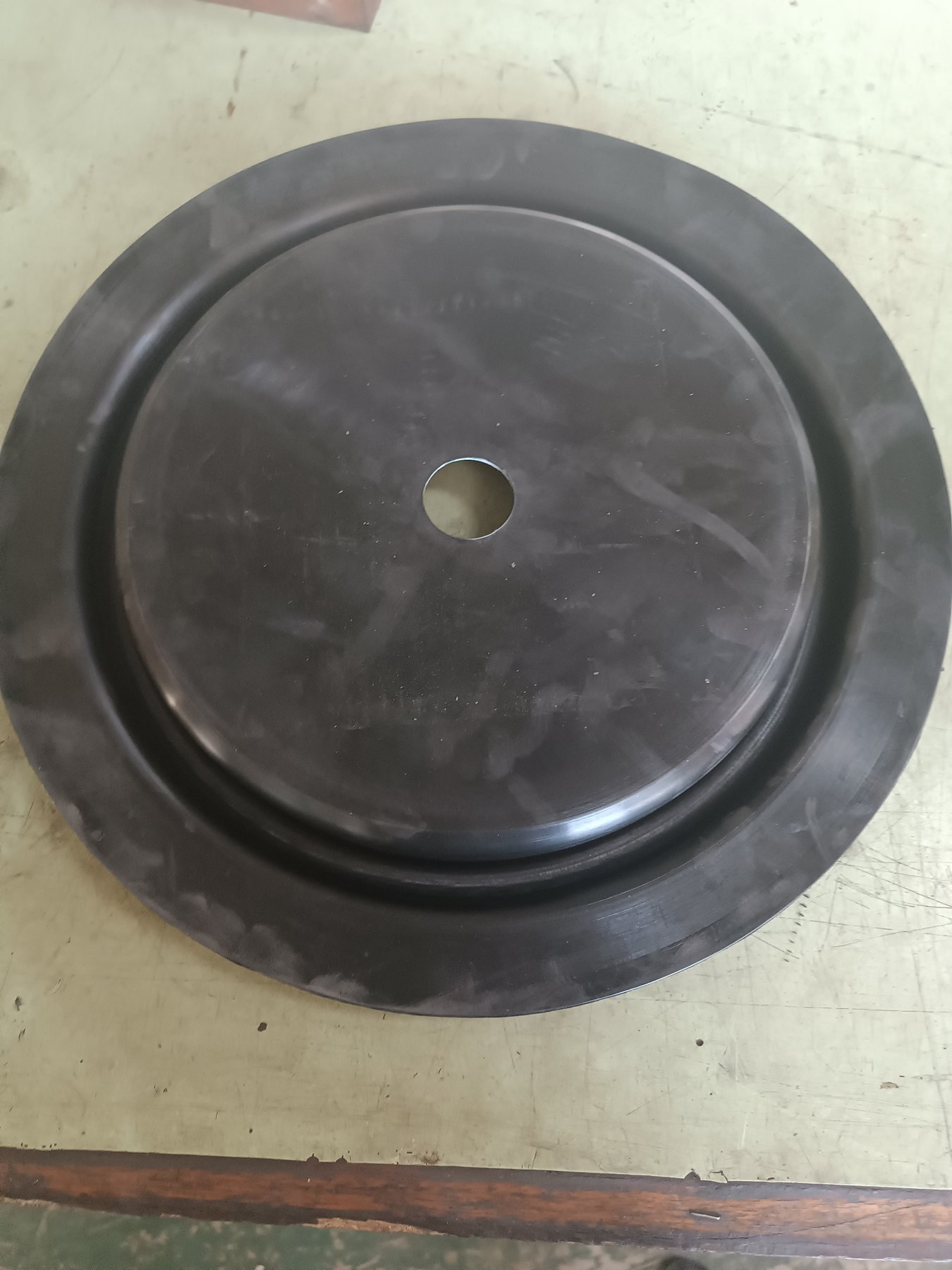
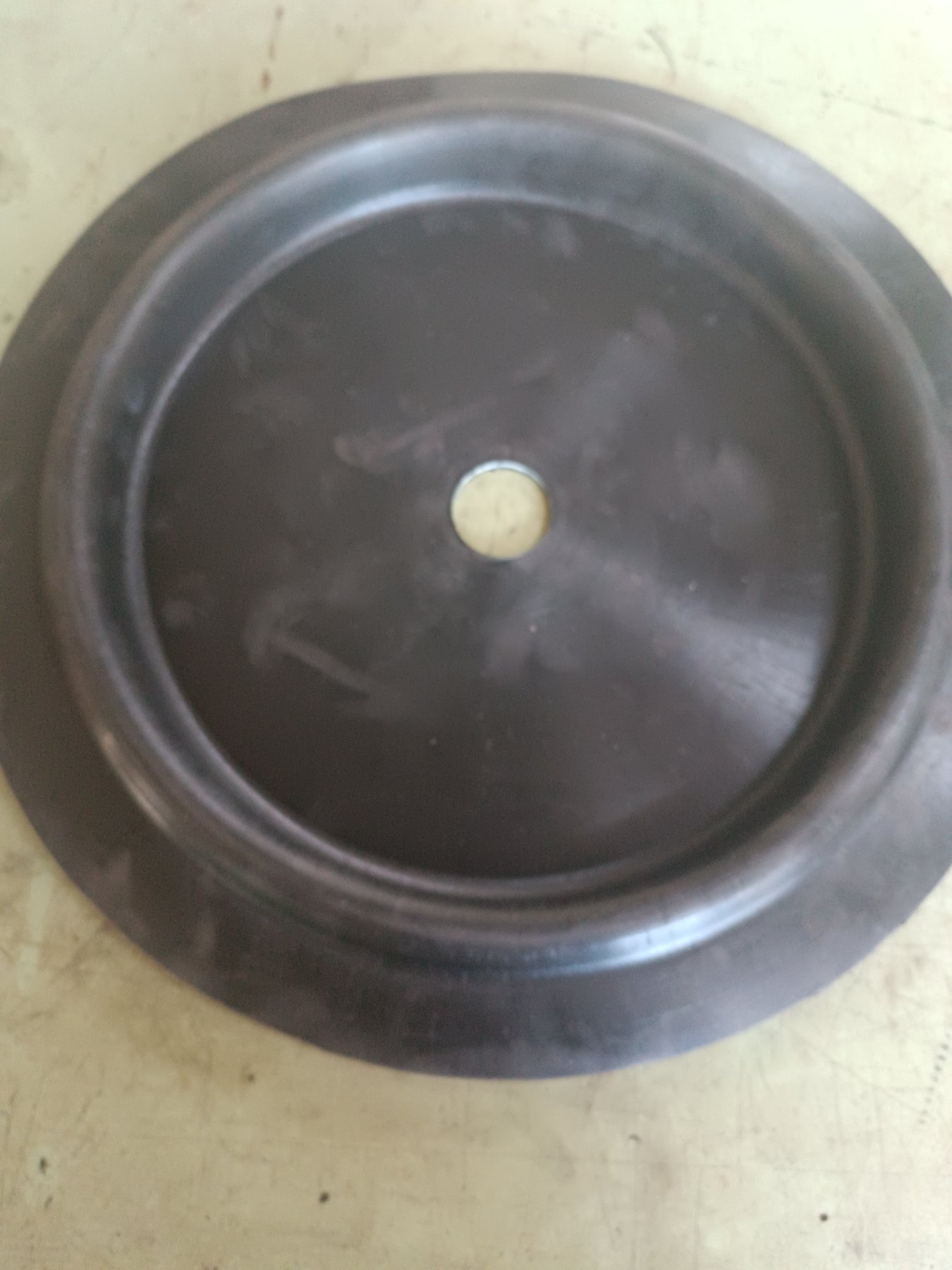
Diaphragms — for pumps, actuators, valves and pressure vessels. Usually fabric-reinforced, and usually the part that fails first in a diaphragm pump.
Bushes — for suspension, linkages and mountings, where the rubber does the work of both a bearing and a spring.
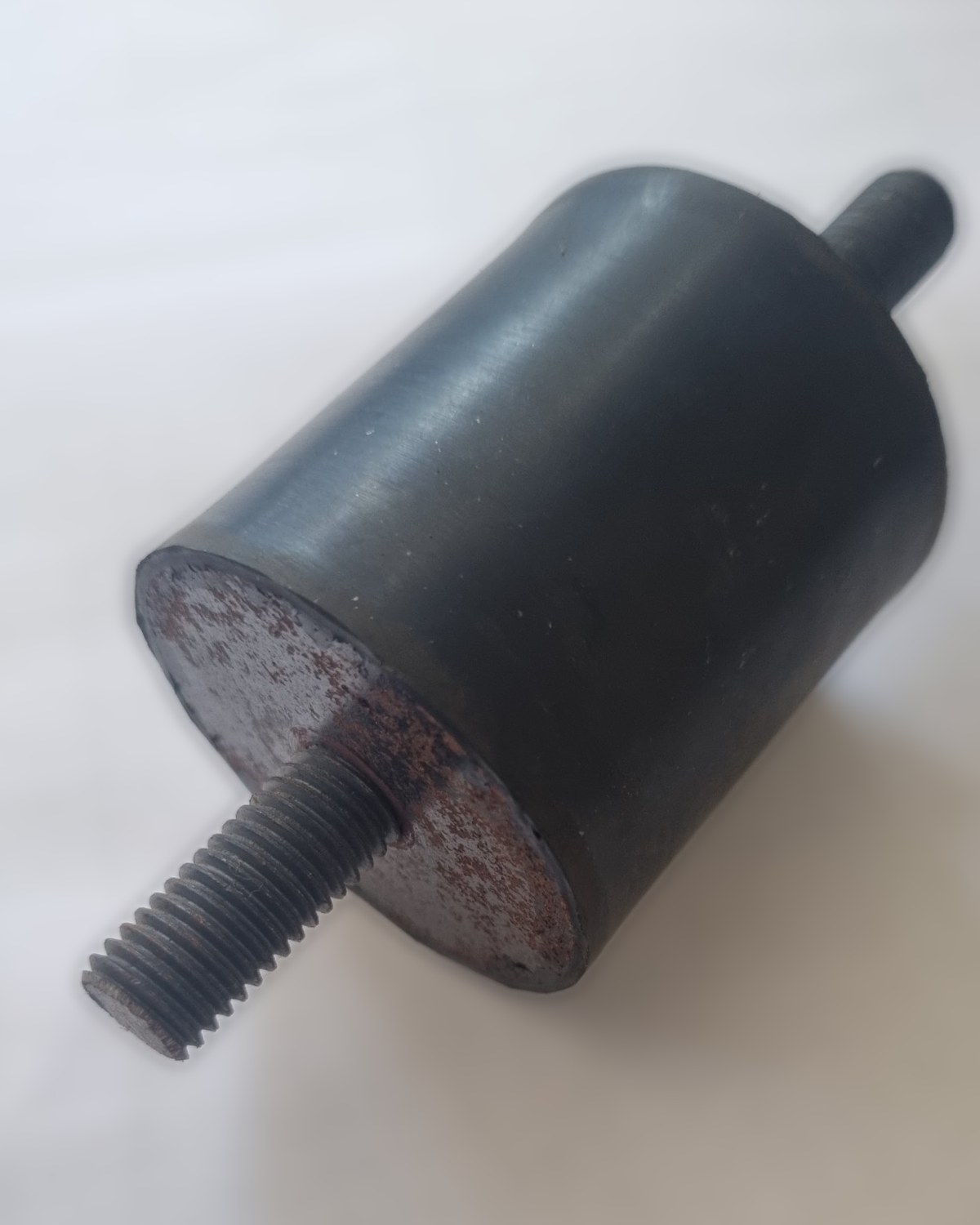
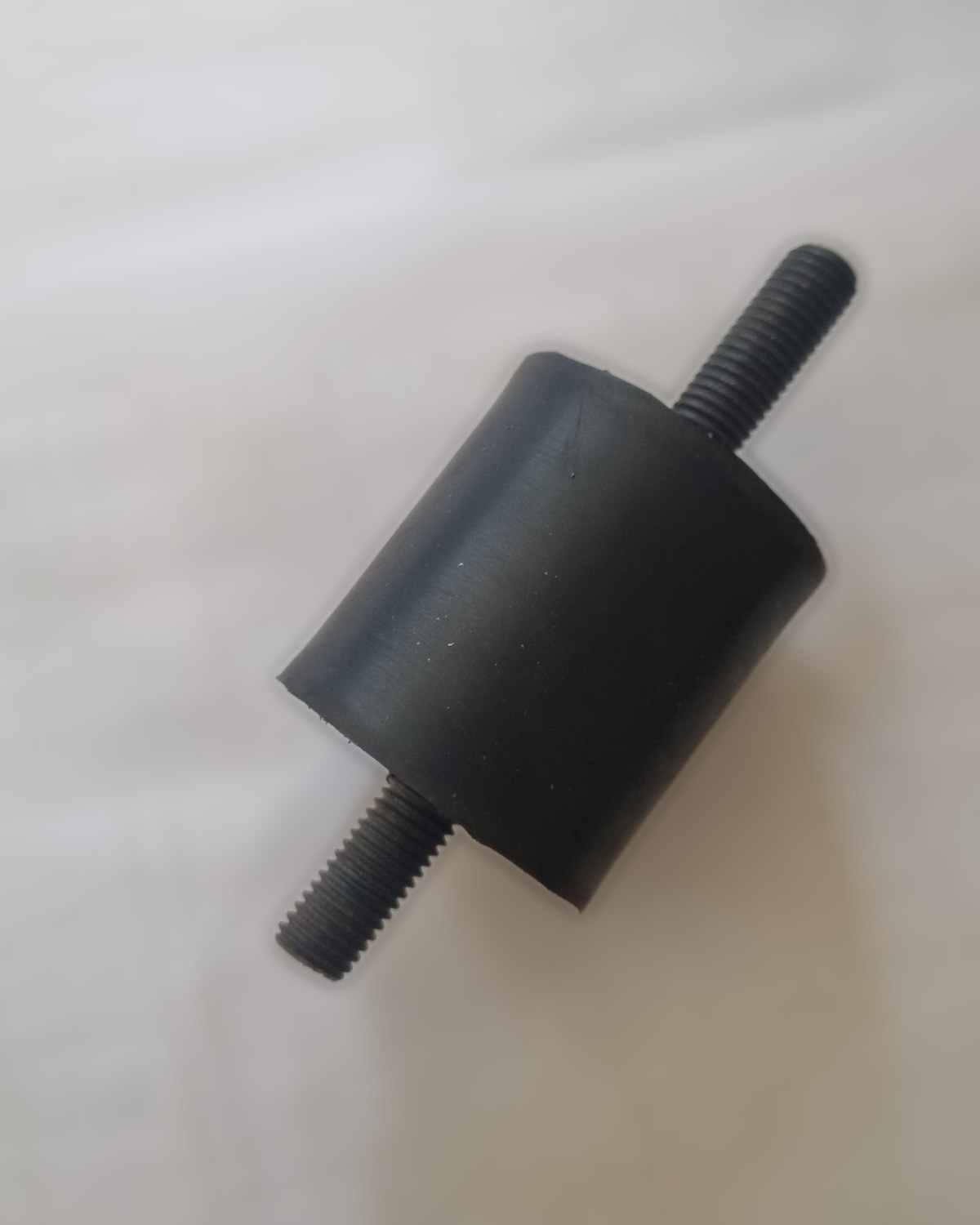
Anti-vibration mountings — machine feet and mounts that isolate a machine from its base.
Engine anti-vibration mountings — engine mounts that hold an engine in place and soak up its vibration.
Boots and bellows — protecting a shaft, joint or ram from dust and water. Once one splits, the component behind it starts wearing immediately.
Gaskets — where a standard size does not exist or is not available.
Inflatable seals — seals that expand under pressure to close a gap, and deflate to release it.
Anything else to sample or drawing — in the compound and hardness the job needs.
 1 / 3
1 / 3Rubber-to-metal parts
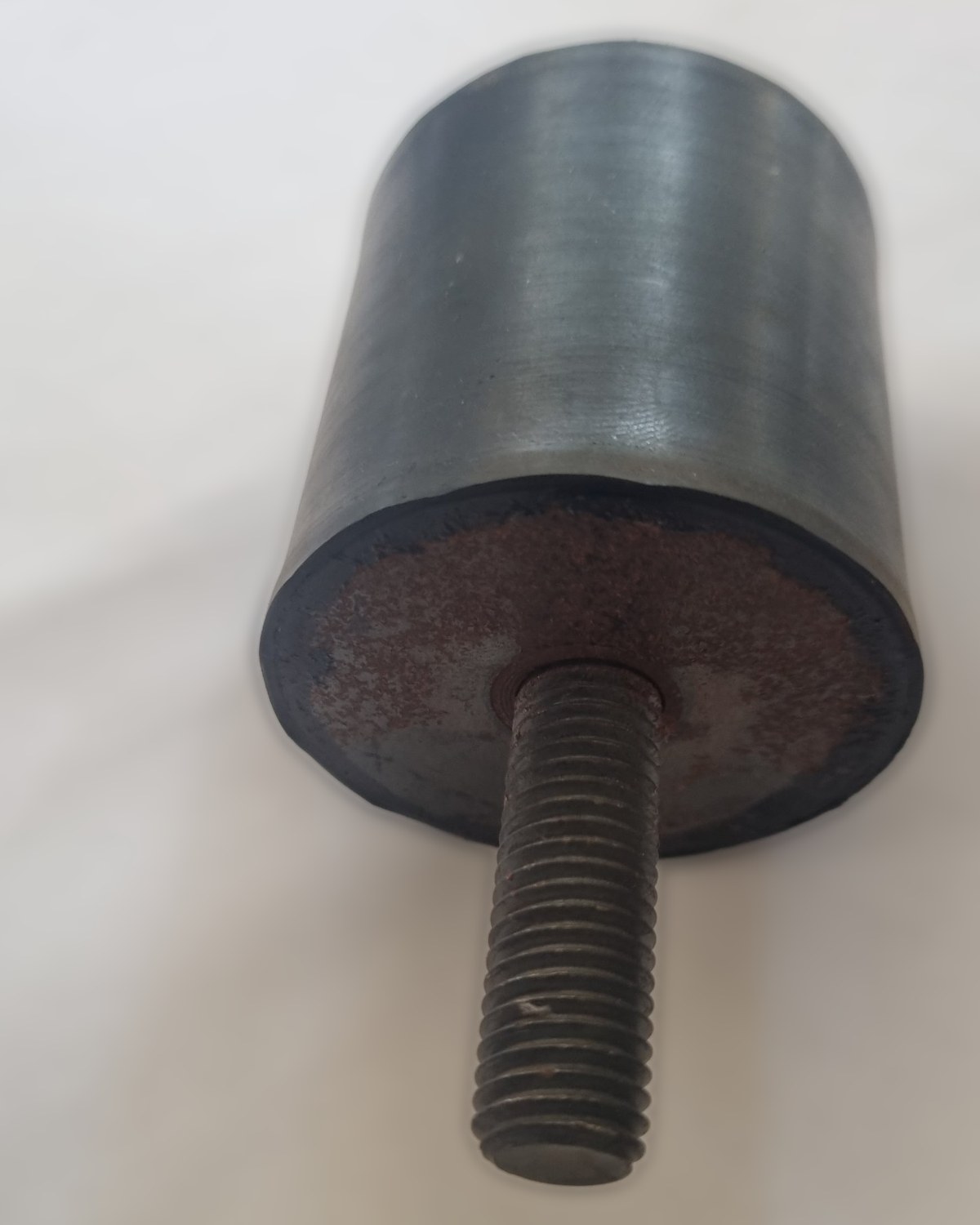
Some parts need rubber and steel in one piece, like a mounting with a threaded stud on each end. We vulcanise the rubber onto the metal in the mould, so it bonds to the steel instead of just sitting on it. Bring us the old part and we will make a new one.
Choosing the material
Getting the compound right matters as much as the shape. A part moulded in the wrong rubber will look perfect and fail in weeks. What decides it is temperature, what the part is in contact with, and whether it is flexing all day or just holding a seal.
| Rubber | Best for | Max. temperature |
|---|---|---|
| Natural rubber | Tough, springy and dependable. Our first choice for parts that live in water. | 70 °C |
| Nitrile | The one for oil, diesel, petrol and hydraulic fluid. It also stands up well to aromatic solvents. | 90 °C |
| Neoprene | Copes reasonably with oils, and handles sun, weather, heat and flame better than natural rubber. A common pick for sewage and refrigeration work. | 90 °C |
| EPDM | Made for the outdoors: it shrugs off ozone, sunlight and mild acids. Handles saturated steam, and is a regular in food processing because it is clean to use. | 110 °C |
| Viton | Our choice when acids, fuels and oils are involved. It outlasts EPDM in most of them. | 200 °C |
| Silicone | Takes the most heat of all six, and is clean enough for food plants, which is why the food industry relies on it. Available with a food-grade certificate. | 250 °C |
Natural rubber
Tough, springy and dependable. Our first choice for parts that live in water.
Max. temperature: 70 °C
Nitrile
The one for oil, diesel, petrol and hydraulic fluid. It also stands up well to aromatic solvents.
Max. temperature: 90 °C
Neoprene
Copes reasonably with oils, and handles sun, weather, heat and flame better than natural rubber. A common pick for sewage and refrigeration work.
Max. temperature: 90 °C
EPDM
Made for the outdoors: it shrugs off ozone, sunlight and mild acids. Handles saturated steam, and is a regular in food processing because it is clean to use.
Max. temperature: 110 °C
Viton
Our choice when acids, fuels and oils are involved. It outlasts EPDM in most of them.
Max. temperature: 200 °C
Silicone
Takes the most heat of all six, and is clean enough for food plants, which is why the food industry relies on it. Available with a food-grade certificate.
Max. temperature: 250 °C
Tell us what the part sits in and how hot it gets, and we will tell you what it should be made of.
Hardness
Rubber hardness is measured in Shore hardness, with a durometer, on the Shore hardness scale. The same rubber can be soft enough for a seal or hard enough for a bush — so the hardness matters as much as the compound. If you have the old part, we measure it. If you know the Shore hardness, tell us.
What we need from you
- The old part, or a piece of it
- Or a drawing, or a photograph with a ruler in it
- Temperature and what it is in contact with
- How many you need
Send it through and we will quote it.
Enquiry
Send us your part.
Tell us what's broken, worn or needed from scratch. Photos and drawings help. We'll quote it and get back to you.